In high-frequency electronic systems such as 5G communication, satellite navigation, radar detection, precision testing, and aerospace applications, the stability, low loss, and anti-interference capability of signal transmission directly determine the operational accuracy and reliability of the entire equipment. As core supporting devices for high-frequency signal transmission, RF coaxial cable assemblies are integrated transmission units composed of RF coaxial cables, precision RF connectors, and auxiliary accessories. They are mainly used for transmitting electromagnetic signal energy in the RF and microwave frequency bands, serving as indispensable fundamental components of modern wireless electronic equipment and widely supporting signal connection and data interaction in various high-frequency systems.
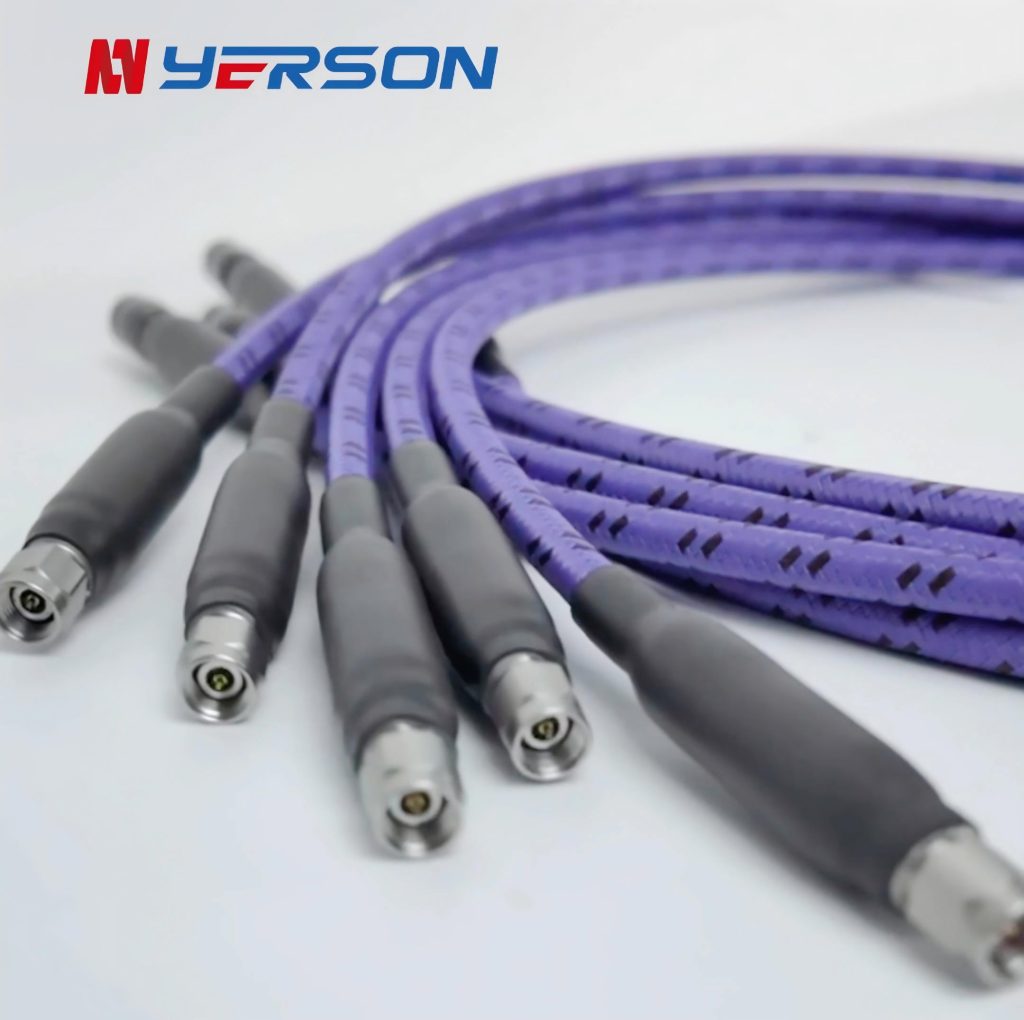
Different from ordinary cables, RF coaxial cable assemblies eliminate core problems such as radiation leakage, external interference, and impedance mismatch in high-frequency signal transmission by virtue of their unique coaxial symmetrical structure. Featuring wide transmission frequency bandwidth, low loss, excellent shielding performance, and stable impedance, they have become the preferred carrier for signal transmission in high-frequency electronic systems.
The core advantages of RF coaxial cable assemblies stem from their standardized four-layer coaxial symmetrical structure. Each layer performs distinct and coordinated functions to ensure stable high-frequency signal transmission. Complete assemblies consist of four layers from the inside out: central conductor, dielectric medium, outer conductor shielding layer, and outer protective sheath, together with precision connectors mounted at both ends.
According to cable flexibility, structural form and application scenarios, RF coaxial cable assemblies are divided into three categories, covering full-scenario applications from civil communication to military aerospace and precision testing.
1. Flexible Cable Assemblies
Represented by RG series and LMR series cables, flexible cable assemblies feature superior flexibility for repeated bending and random wiring. They are suitable for internal equipment wiring and mobile connection scenarios. With high cost performance, flexible wiring and strong compatibility, they are mainstream products for civil 5G base stations, IoT devices and civil testing instruments. Their operating frequency generally covers DC~6 GHz, meeting conventional high-frequency transmission requirements.
2. Semi-Flexible Cable Assemblies
With flexibility between flexible and semi-rigid cables, semi-flexible cable assemblies can be manually shaped and positioned without rebound after bending. Balancing wiring flexibility and structural stability, they deliver outstanding shielding performance and stable VSWR indicators. They are commonly applied to fixed wiring of indoor RF systems, medium and small-sized radars, and communication equipment for medium and high-frequency signal transmission.
3. Semi-Rigid / Rigid Cable Assemblies
Adopting a solid outer conductor structure, semi-rigid and rigid cable assemblies feature high hardness and fixed shapes that require professional tools for shaping and cannot be bent arbitrarily. They achieve ultra-low loss, ultra-low VSWR, ultra-high shielding efficiency and extremely high impedance accuracy, with far superior performance stability compared with flexible cables. Supporting frequency bands from DC~50 GHz and even higher millimeter-wave frequencies, they are widely used in high-end and high-precision scenarios including aerospace, military radar, precision microwave testing and satellite communication, complying with strict GJB military standards.
Wide Application Coverage: High-End and Civil Fields
With excellent high-frequency transmission performance and environmental adaptability, RF coaxial cable assemblies have penetrated multiple core fields including communication, military industry, aerospace, industry, medical treatment and precision testing, acting as the “neural veins” of modern high-frequency electronic systems.
1. Communication Field
As core supporting components, they are widely applied in 5G/6G base stations, micro base stations, optical fiber radio remote units, indoor distribution systems and satellite communication equipment. They realize efficient RF signal transmission and antenna connection, ensuring the stability and coverage quality of wireless communication.
2. Military and Aerospace Field
They adapt to high-end scenarios such as radar detection, missile measurement and control, airborne equipment, aerospace satellites and shipborne RF systems. Military-grade semi-rigid and low-loss cable assemblies feature high stability, high and low temperature resistance, vibration resistance and strong anti-interference capability, meeting the requirements of long-term reliable operation under extreme working conditions and complying with stringent military standards.
3. Precision Testing and Measurement Field
Applied to microwave testing equipment such as vector network analyzers, signal generators and spectrum analyzers, high-precision, low-VSWR and low-loss test-grade cable assemblies minimize testing errors and ensure the accuracy of experimental data, serving as basic supporting equipment for RF research and development as well as quality inspection testing.
4. Industrial and Civil Field
Covering IoT RF devices, vehicle navigation, smart home RF modules, radio and television signal transmission, and medical high-frequency equipment, standardized flexible cable assemblies meet civil high-frequency signal transmission requirements with high cost performance and strong compatibility.
Though structurally simple in appearance, RF coaxial cable assemblies are core fundamental devices that determine the signal transmission quality of high-frequency electronic systems. Their low-loss, high-shielding and high-stability transmission characteristics support the normal operation of various high-frequency equipment, ranging from civil communication to high-end aerospace and military radar systems. With the continuous innovation of RF technology, RF coaxial cable assemblies will continue to upgrade towards higher precision, higher frequency bands, miniaturization and longer service life, continuously empowering the high-quality development of the communication, military and industrial technology industries.