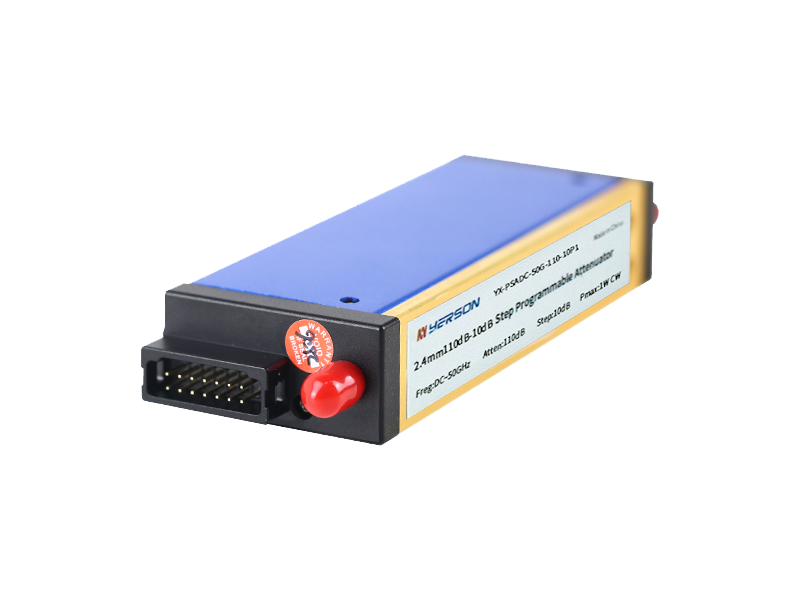
In modern microwave and millimeter-wave RF systems, efficient signal switching between diverse transmission media is frequently required. As a critical passive transition component, waveguide to coax transition enables precision interconnection between waveguide and coaxial ports, serving as an essential foundational part to secure stable, high-efficiency and low-distortion operation of RF links.
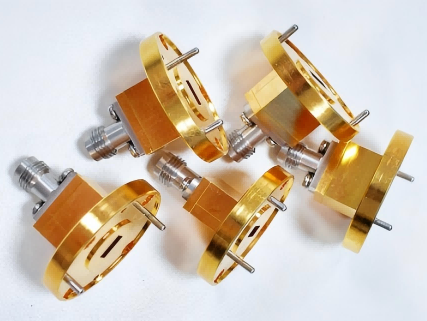
Waveguides and coaxial cables are two mainstream transmission line configurations with distinct field distributions, impedance characteristics and applicable scenarios. Waveguides feature low insertion loss, high power handling and superior shielding performance, widely deployed in high-end equipment including radar, satellite communication and millimeter-wave instruments. Coaxial cables excel in flexible installation, standardized connectors and easy integration with test instruments and active modules. Direct docking of the two transmission lines triggers severe signal reflection stemming from mismatched field modes and discontinuous impedance, further resulting in signal degradation, power dissipation and unstable system performance.
With elaborately engineered coupling probes, short-circuit structures and tapered impedance sections, waveguide to coax transitions realize efficient conversion from waveguide TE10 mode to coaxial TEM mode for smooth energy transition across two port types, delivering outstanding performance featuring low loss, low VSWR and wide operating bandwidth.
In practical deployment, premium waveguide to coax transitions drastically cut insertion loss for efficient power transmission; ultra-low voltage standing wave ratio (VSWR) suppresses signal reflection and improves system impedance matching. Its wideband capability covers single or multiple waveguide frequency bands to accommodate diversified applications and boost overall system compatibility.
These components are extensively adopted in microwave measurement, radar systems, satellite communication, 5G/6G millimeter-wave communication and aerospace equipment. Whether for lab instrument interconnection, internal device wiring or complete system integration, waveguide to coax transitions act as a seamless signal bridge between waveguide and coaxial interfaces with consistent and reliable performance.
Benefiting from compact outline, stable performance, outstanding batch consistency and broad working frequency range, waveguide to coax transitions are indispensable precision interface solutions for contemporary RF systems, underpinning high-efficiency high-frequency signal transmission and dependable system operation.
Key Selection Criteria for Waveguide-to-Coax Transitions to Match Custom System Specifications
Frequency Range: Prioritize full coverage of target operating bandwidth with proper frequency margin to prevent high-frequency cutoff.
Waveguide Specification: Match WR-series waveguide part numbers and flange standards to guarantee mechanical assembly and electrical conformity.
Coaxial Connector: Select based on working frequency: SMA (≤18GHz), 2.92mm (≤40GHz), 2.4mm / 1.85mm (≤67GHz).
Electrical Parameters: Evaluate insertion loss, VSWR, power rating and operating temperature; opt for low-loss & low-VSWR variants for rigorous working conditions.
Configuration Style: Right-angle (side-mounted) design reduces longitudinal space; inline (end-launched) type fits compact equipment layout for customized selection.