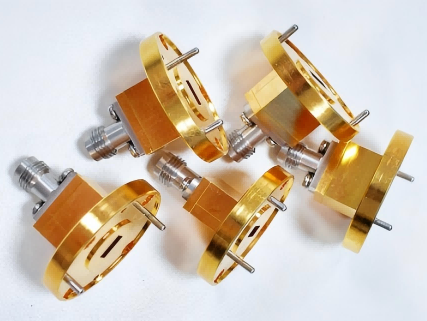
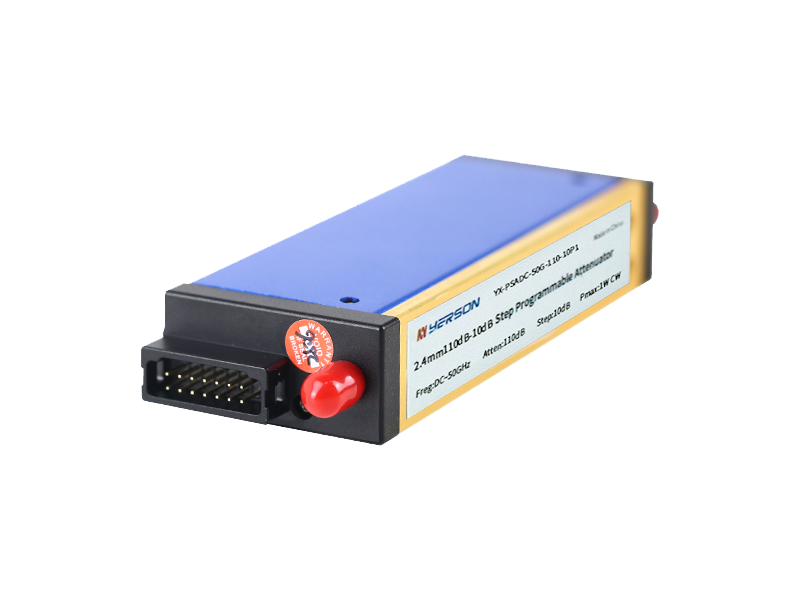
In RF microwave, communication test, radar and military systems, there is an inconspicuous yet indispensable passive component — the RF coaxial fixed attenuator. It does not merely reduce signal power; more importantly, it stabilizes link performance, protects equipment, and optimizes impedance matching for the entire system.
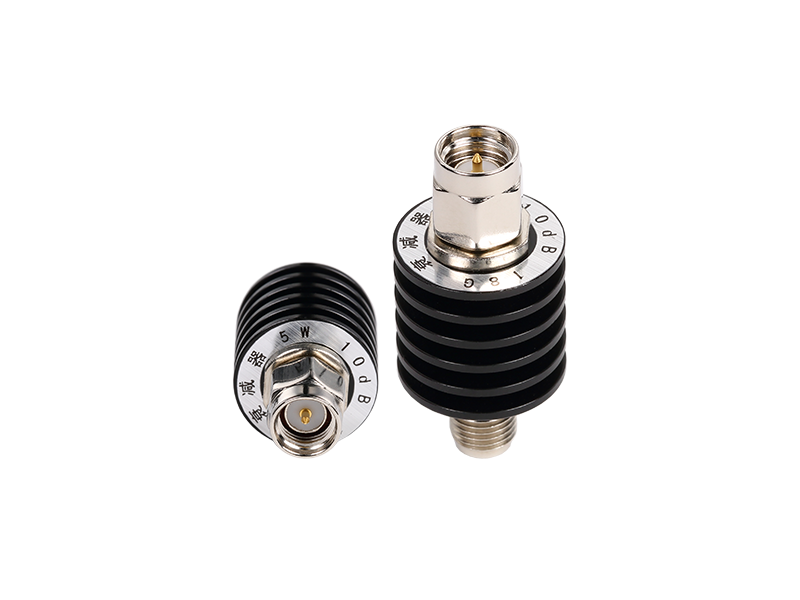
Functions of RF Coaxial Fixed Attenuator
In short: fixedly attenuate signal power, optimize impedance matching, absorb reflected signals, and protect back-end equipment.
Different from adjustable attenuators, fixed attenuators feature factory-calibrated fixed attenuation values with no on-site debugging required. With the advantages of high stability, low VSWR and low additional loss, they are suitable for all conventional RF link scenarios. Adopting a precision internal non-inductive resistor network, the component converts excess RF power into heat and dissipates it. It reduces signal amplitude while maintaining complete signal integrity without waveform distortion or frequency offset.
Four Core Advantages
Low VSWR & Low Insertion Loss: Designed with standard 50Ω impedance matching and excellent voltage standing wave ratio performance, it effectively reduces signal reflection.
Ultra-broadband Compatibility: The frequency coverage ranges from DC to 40GHz for standard models, up to 67GHz for high-end versions, fully compatible with 5G, microwave and millimeter-wave application scenarios.
Robust & Durable: Equipped with a metal shielded housing, it features anti-interference, shock resistance and high temperature resistance, adapting to harsh working conditions including indoor, outdoor, vehicle-mounted and airborne environments.
Classification of RF Coaxial Fixed Attenuators
Power Rating: Low power (1W/2W), medium power (5–20W), high power (30–150W)
Connector Type: SMA, N-type, 3.5mm, 2.92mm, 2.4mm, etc.
Frequency Band: Civil band within 6GHz, microwave band 6–40GHz, millimeter-wave band above 40GHz
Core Selection Parameters
Fixed attenuation value (common specifications: 3/6/10/20/30dB), operating frequency range, maximum power capacity, VSWR, and attenuation accuracy.
Main Application Scenarios
Equipment Protection for Testing Instruments: Matched with spectrum analyzers and receivers to lower high input signal power and prevent burnout of precision test equipment caused by overload.
Impedance Optimization: Resolve link impedance mismatch, absorb reflected signals, reduce VSWR, and improve overall transmission stability.
Power Calibration: Applied in the debugging of base stations, RF modules and radar systems to achieve fixed attenuation and accurate signal level calibration.
Equipment Buffer Protection: Used in power amplifier and transmitter debugging to buffer sudden load changes and improve test safety.
Selection & Usage Guidelines
Priority shall be given to full frequency band coverage, over 20% power margin, matched connector type and accuracy compliant with application scenarios. During installation, ensure firm and coaxial connector connection. Reserve sufficient heat dissipation space for high-power working conditions. Avoid long-term operation beyond the rated frequency and power range to prevent parameter drift and component damage.
Serving as a stabilizer and buffer for RF systems, coaxial fixed attenuators realize power regulation, impedance optimization and equipment protection with a compact and simple structure. They are essential basic components for communication testing, military radar, microwave and millimeter-wave equipment systems.